
 CAD, Construction
 3D Printing
 CAM, CNC
 3D Metrology
 PDM, MES
 Architecture, Construction
 Mechatronics & Robotics
 Image Processing
 Hardware
 CAD, Construction
 3D Printing
 CAM, CNC
 3D Metrology
 PDM, MES
 Architecture, Construction
 Mechatronics & Robotics
 Image Processing
 Hardware & Software
 Mechatronics & Robotics
NC Code Simulation.
Anyone who programs complex parts is familiar with this situation: The toolpaths look perfect in the CAM system, the simulation runs without collisions, and the NC program seems ready for production. However, it’s only when the part is on the machine that it becomes clear there can be a crucial difference between an executable NC program and an optimal one.
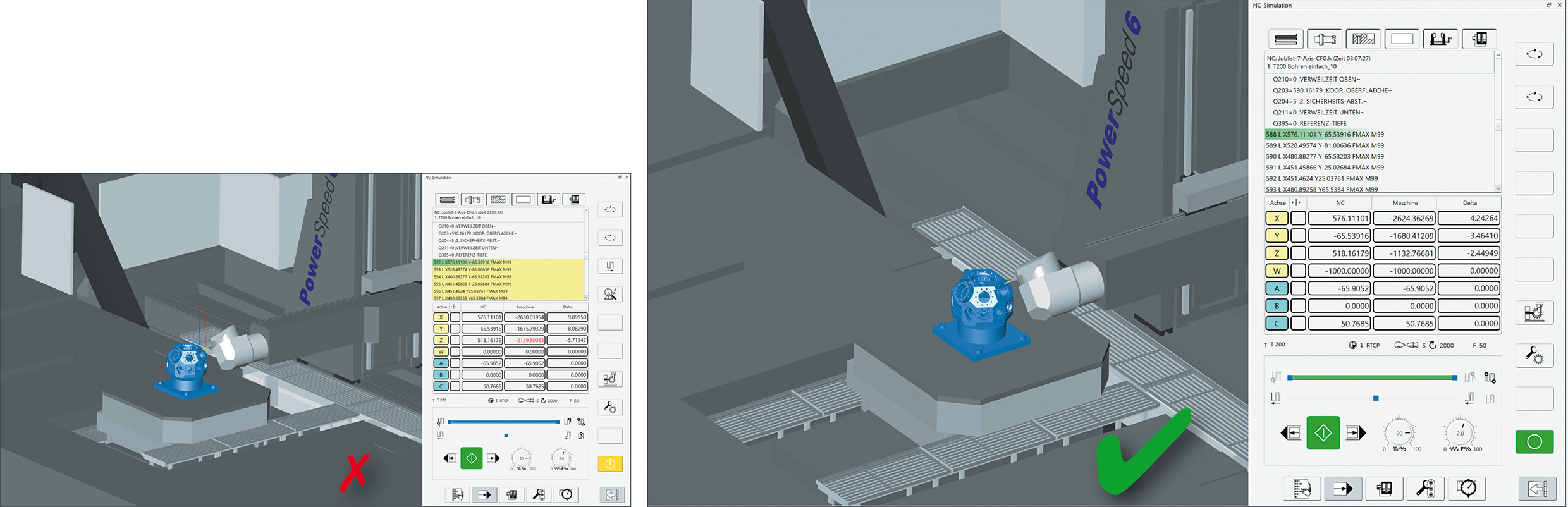
Suddenly, an axis limit is reached, rotational axes perform unnecessary movements, or the machine travels significantly farther than necessary between individual machining steps. The program works—but it does not make optimal use of the machine’s capabilities.
This is exactly where it becomes clear why modern NC code simulation must do more than just check for collisions.
Key Takeaways
- Why isn’t a collision-free NC program enough? Because axis positions, travel distances, and non-productive times can still be inefficient.
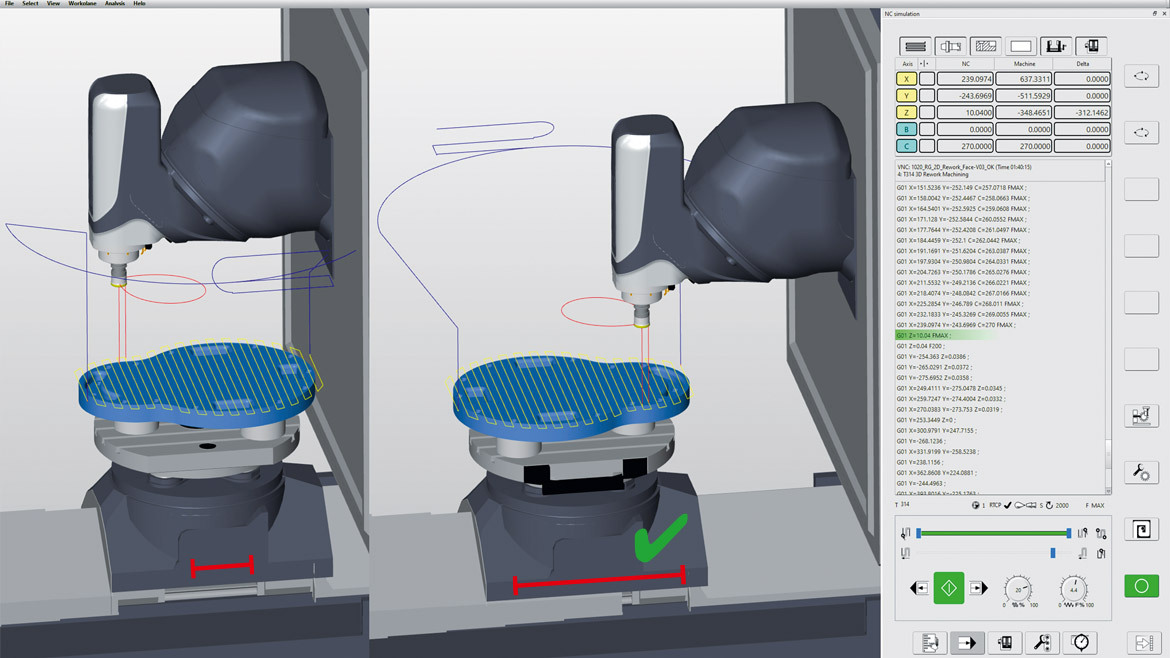
- What does the NC code simulation do? It simulates real machine movements based on a digital twin.
- What does the hyperMILL Optimizer optimize? Axis positions, linked motions, and critical machine conditions.
- What are the benefits? Greater process reliability, less downtime, and more efficient CNC machining.
Latest Webinar Recording
Watch our latest webinar recording on hyperMILL Virtual Machining for free and improve your manufacturing efficiency!
NC Code Simulation with a Digital Twin
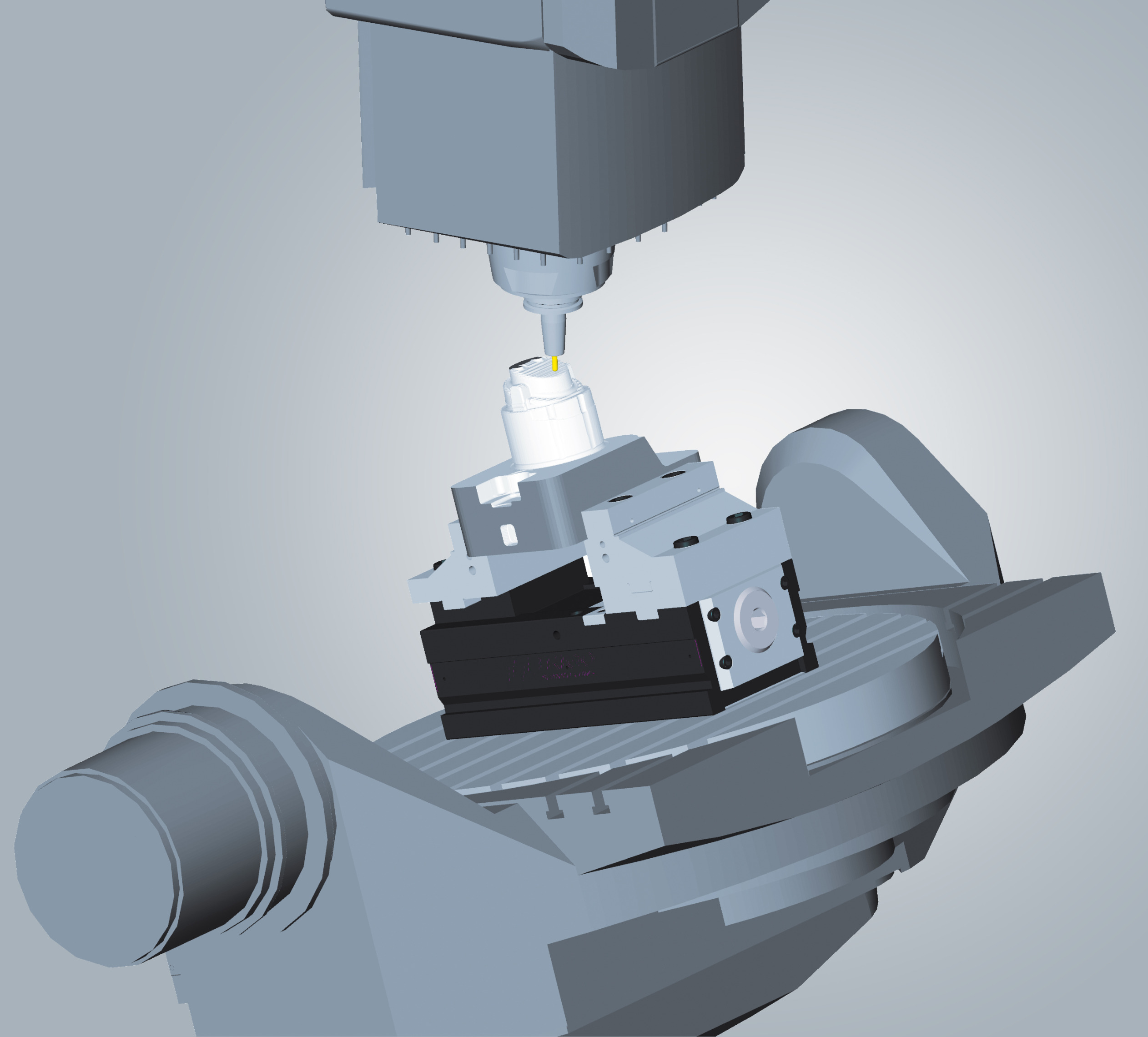
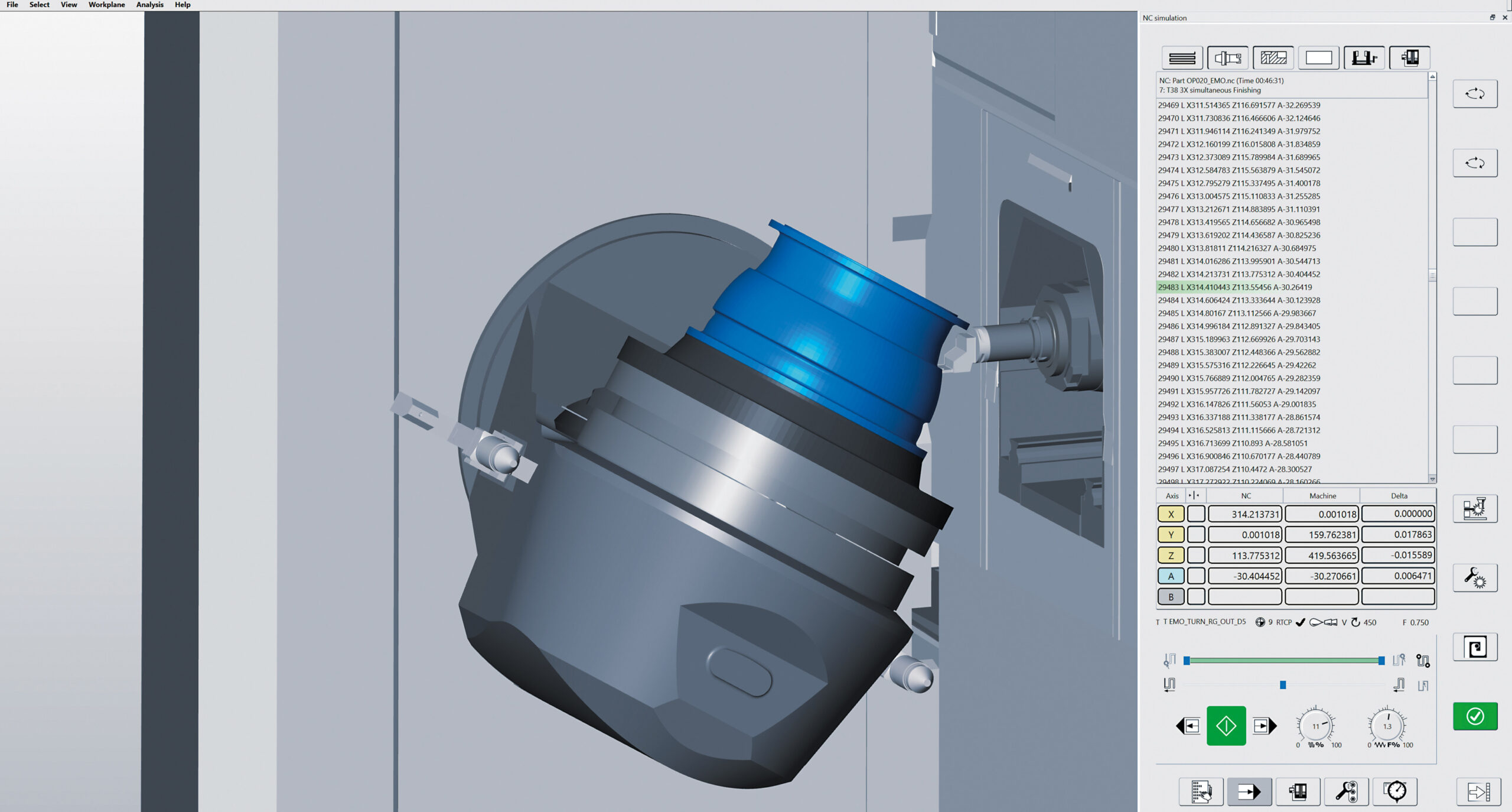
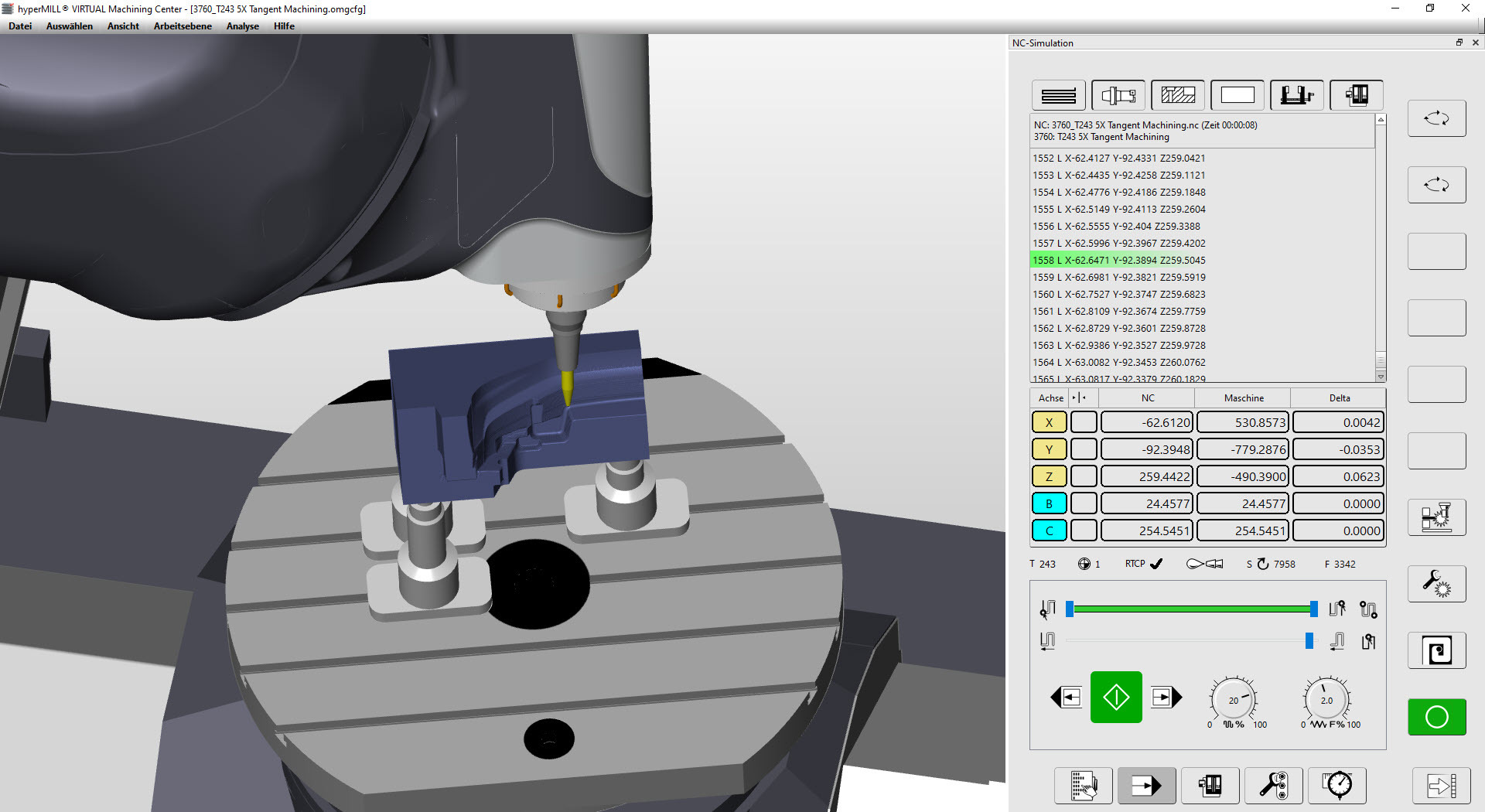
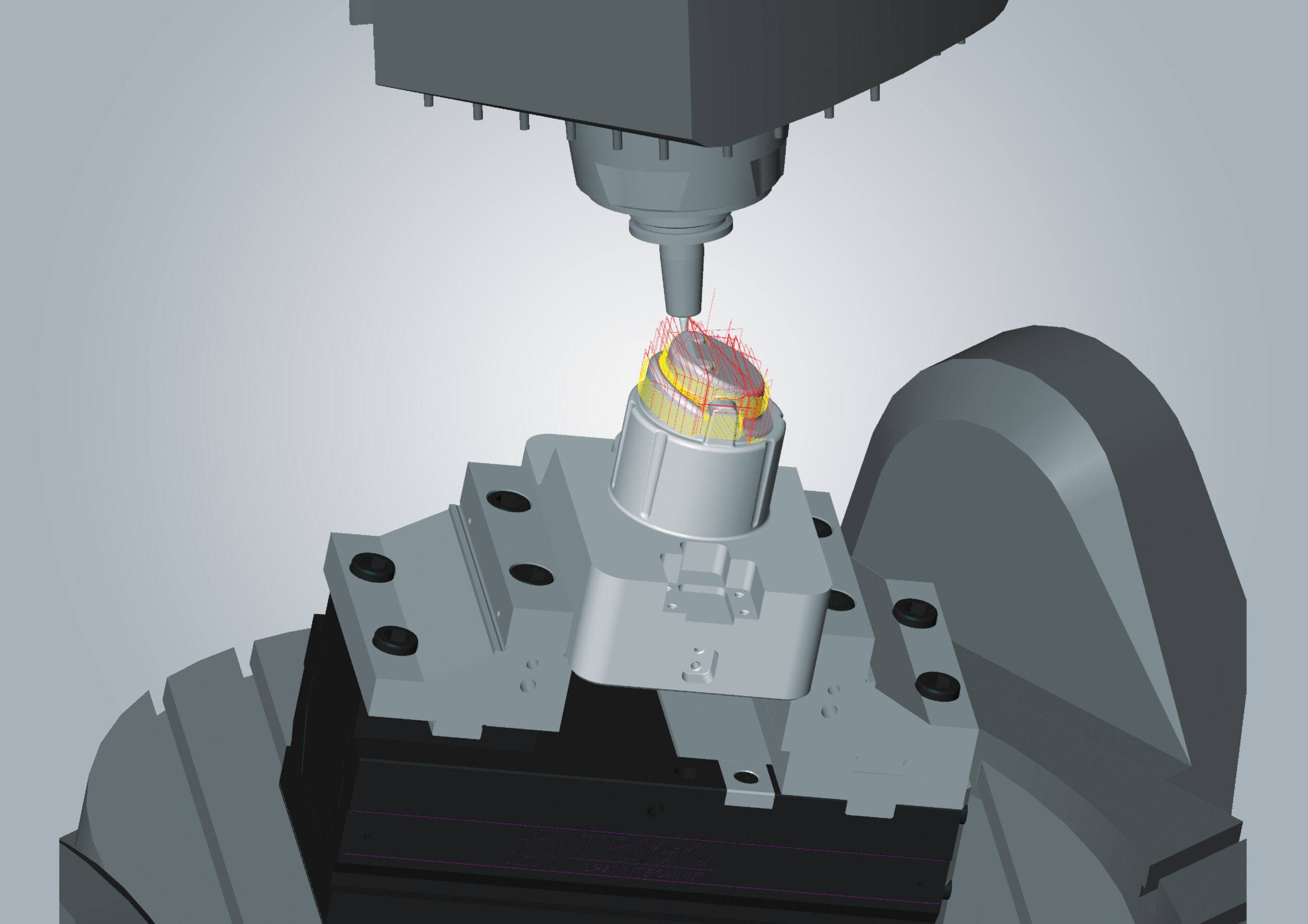
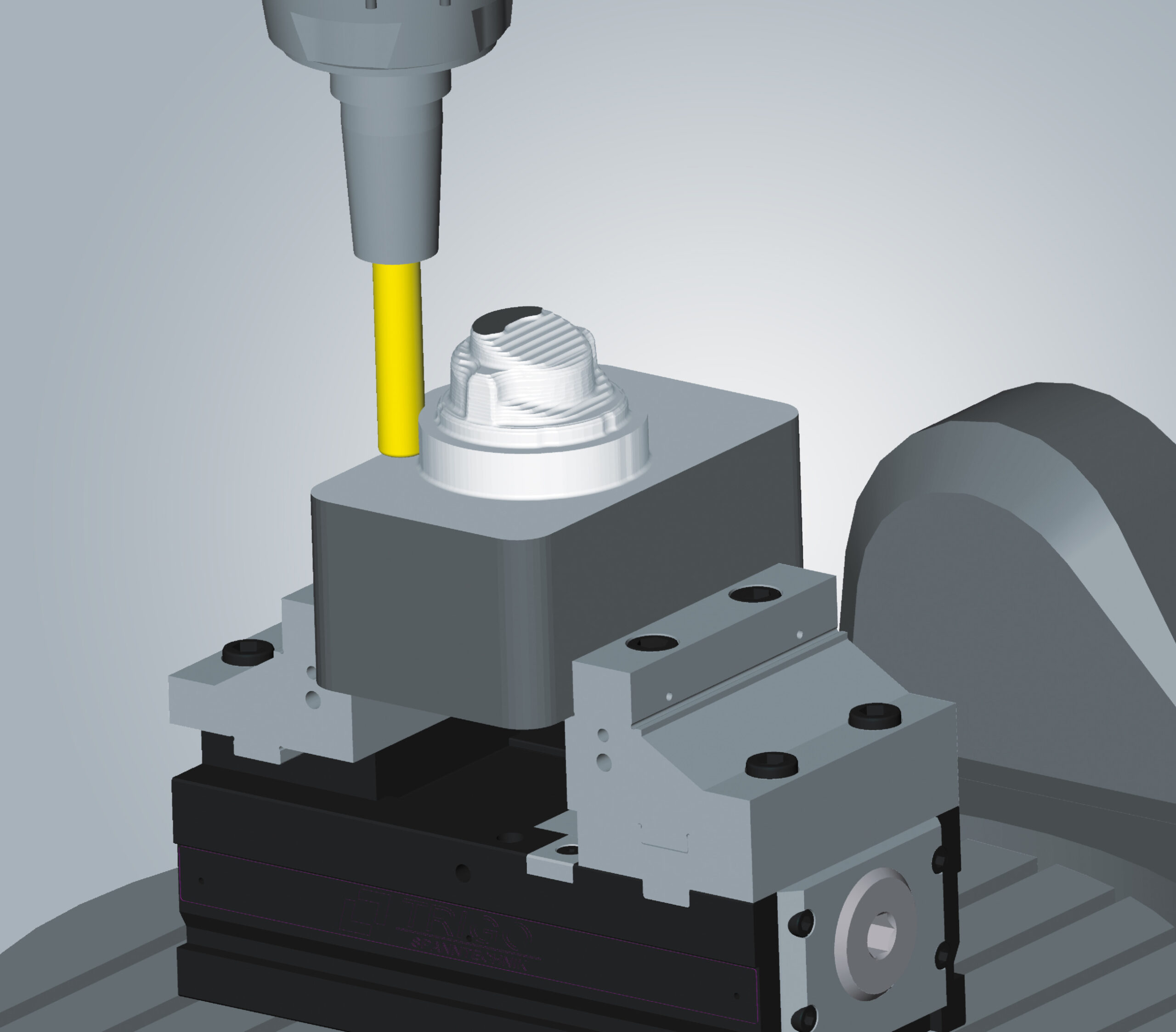
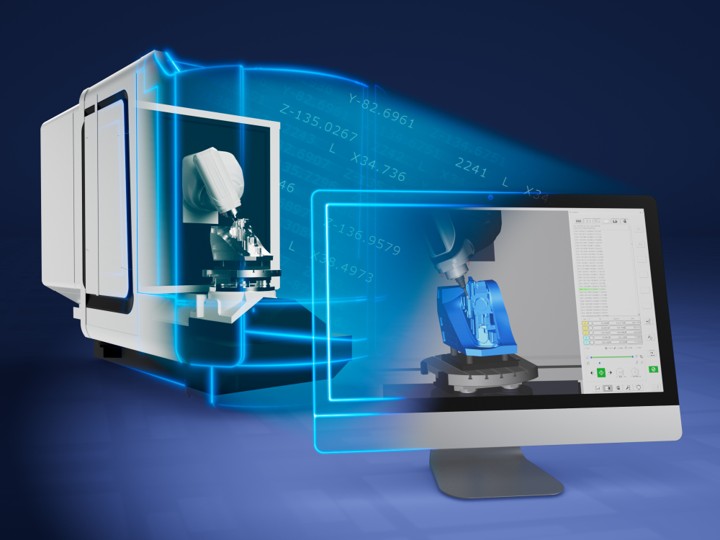
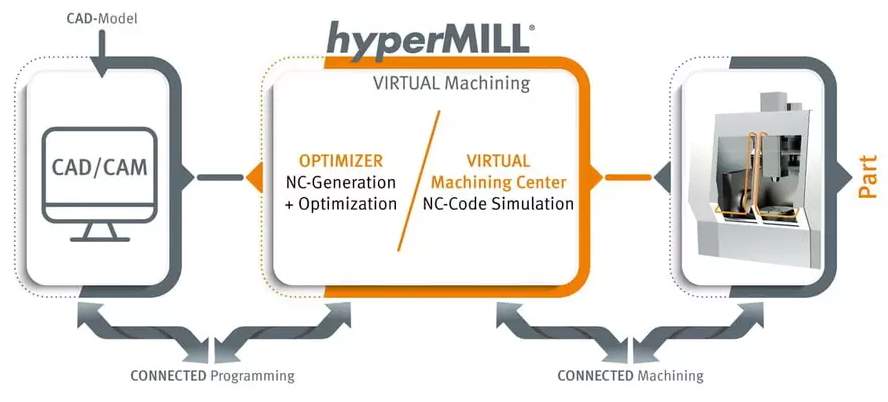
With the hyperMILL Virtual Machine, OPEN MIND takes a consistent approach: It simulates not only the toolpaths, but also the actual NC code that is generated.
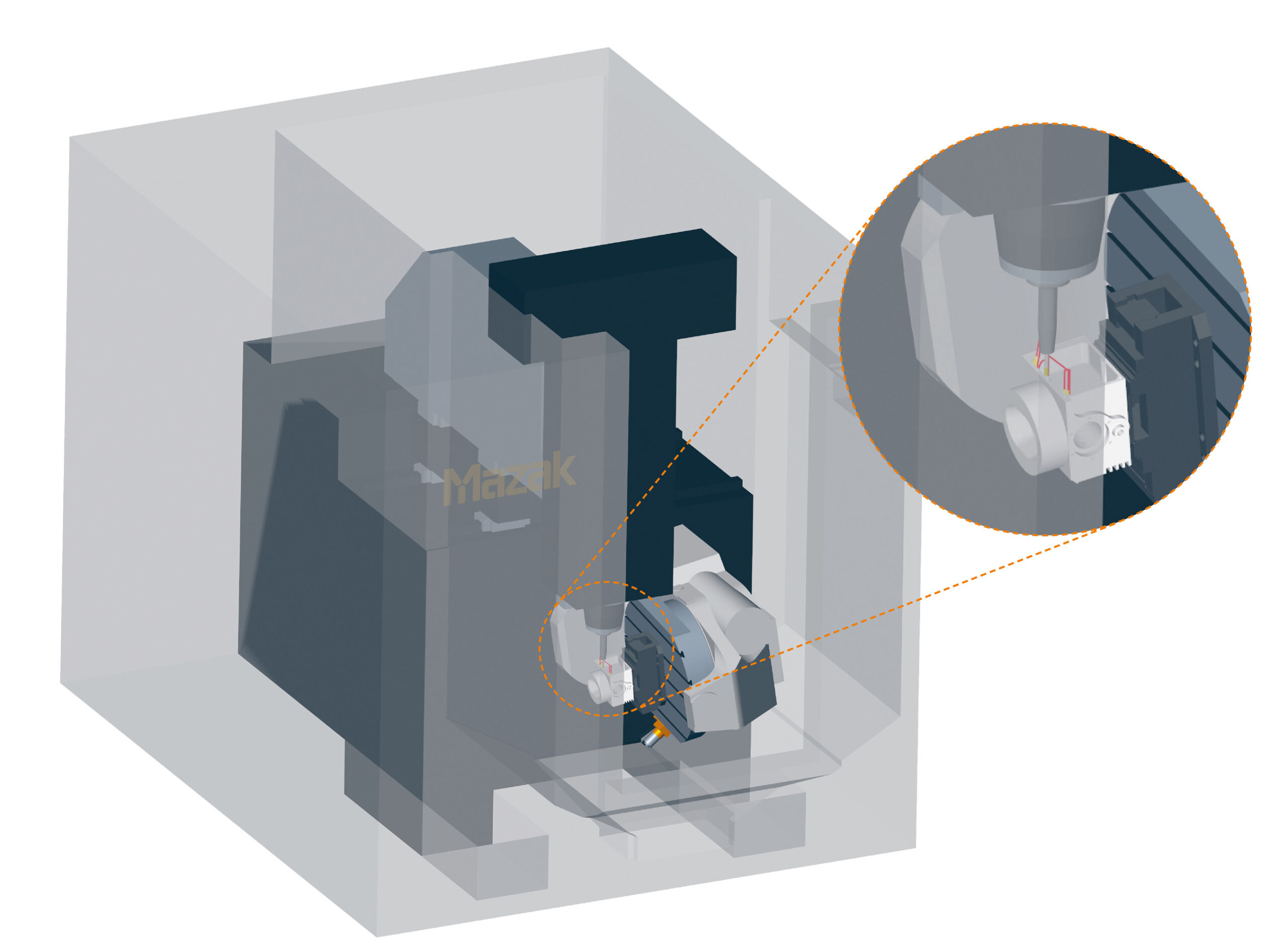
This is based on a digital twin of the actual machine. Among other things, it takes into account machine kinematics, axis limits, travel ranges, clamping devices, and tools. As a result, the actual machining situation can be modeled much more realistically than with a traditional toolpath simulation.
However, the key added value does not lie solely in the simulation.
From Simulation to Optimization
Many simulation systems show the user what will happen on the machine later on. With its integrated optimizer, the hyperMILL Virtual Machine takes it a step further: It analyzes the actual machine movements and optimizes them even as the NC code is being generated.
This transforms the virtual machine from a mere monitoring tool into an active component of the manufacturing strategy.
5-Axis Machining: Automatically Finding the Best Machine Position
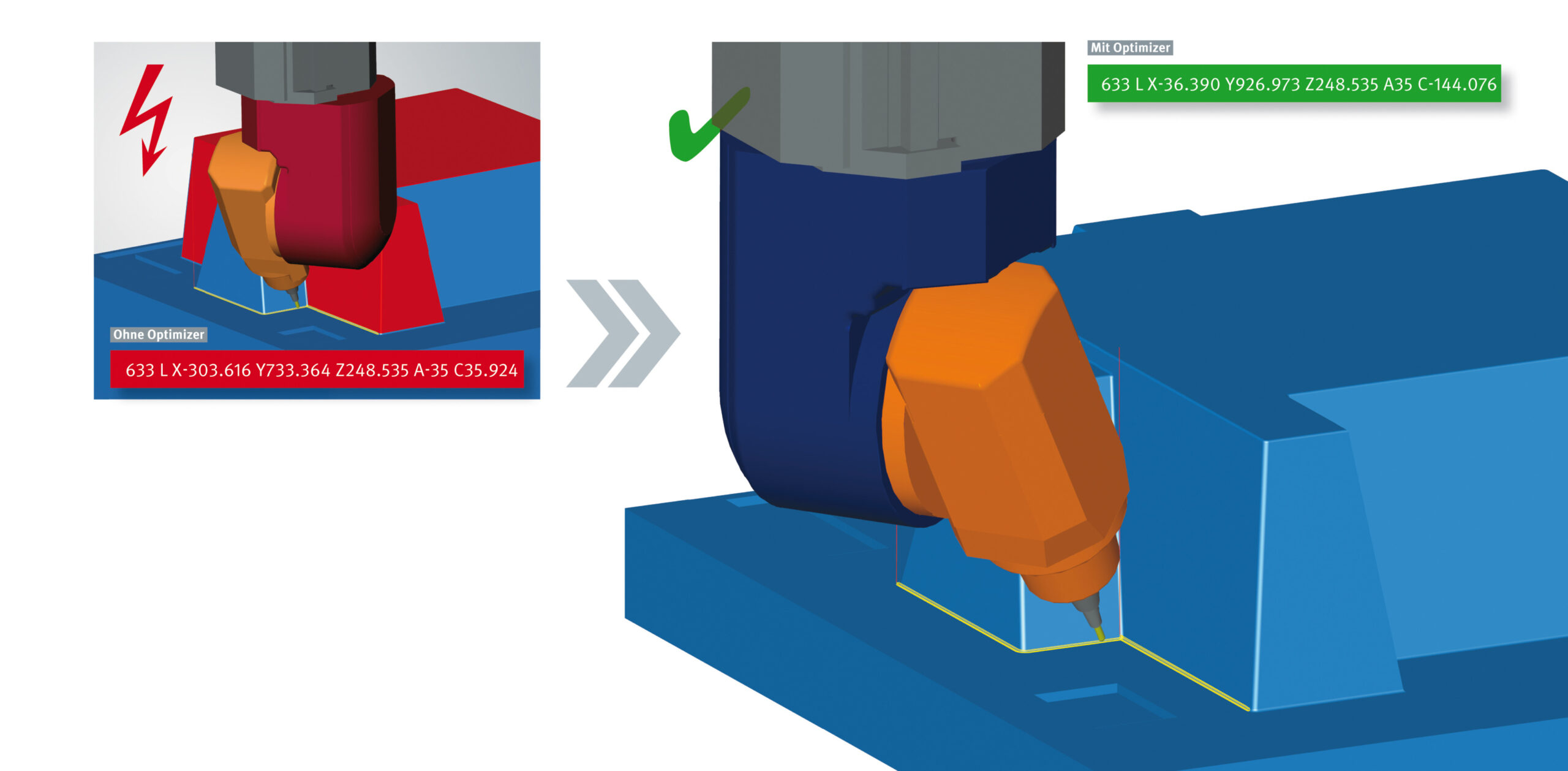
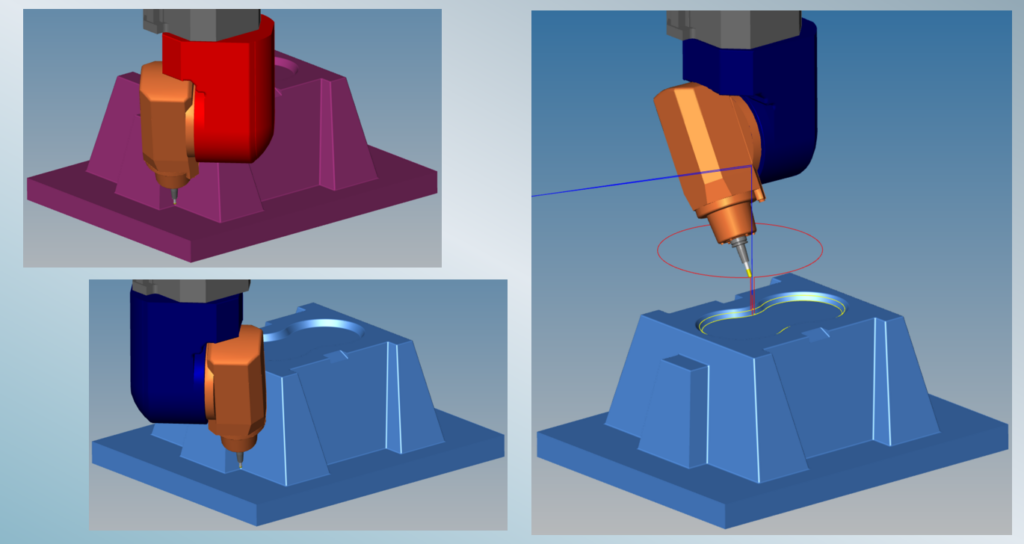
Particularly in the case of simultaneous 5-axis machining, there are often several mathematically possible machine positions for the same machining operation. However, not every theoretically possible solution is also the best solution for the actual machine tool.
In practice, the quality of the resulting NC program therefore often depends heavily on the experience of the CAM programmer.
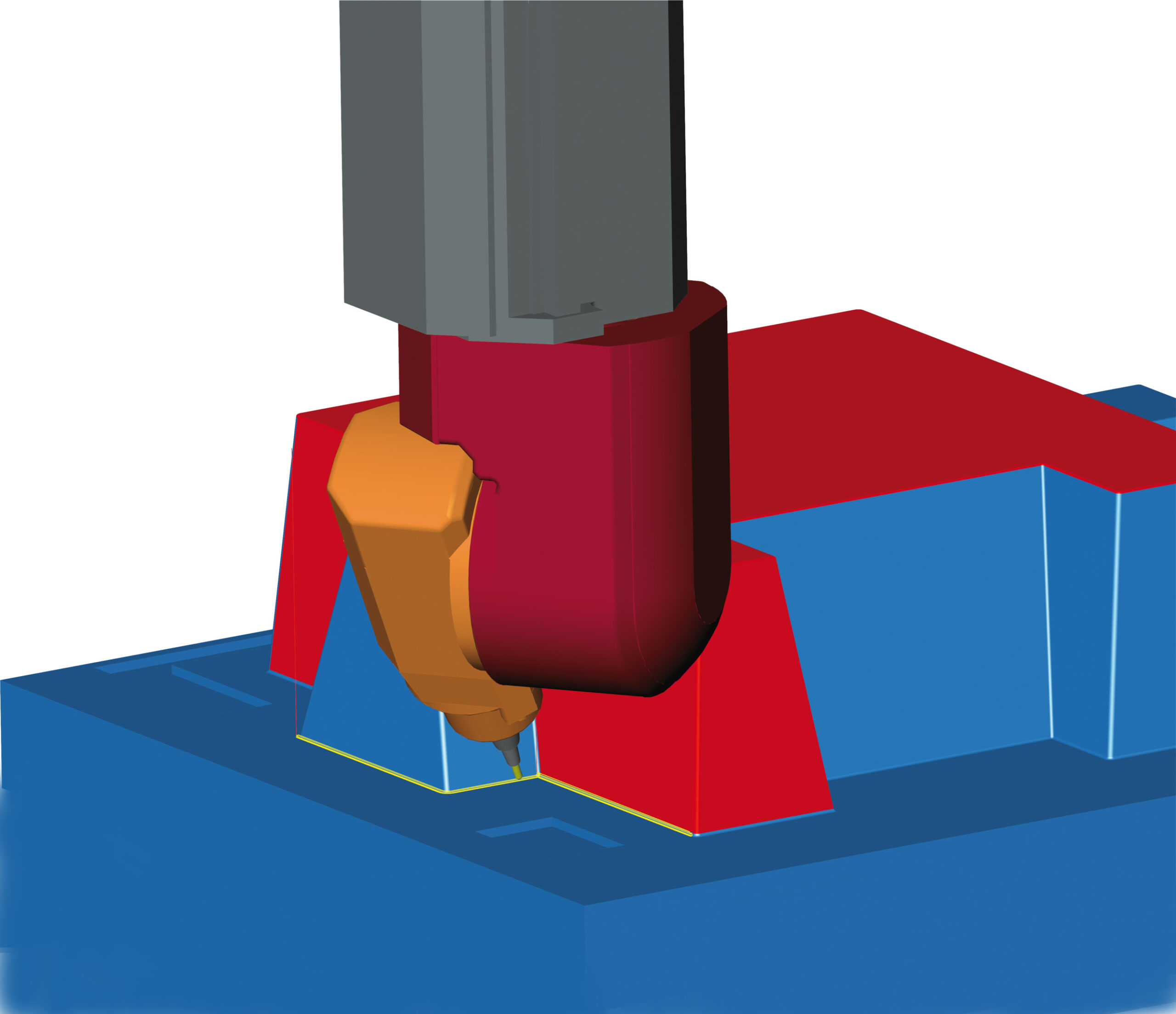
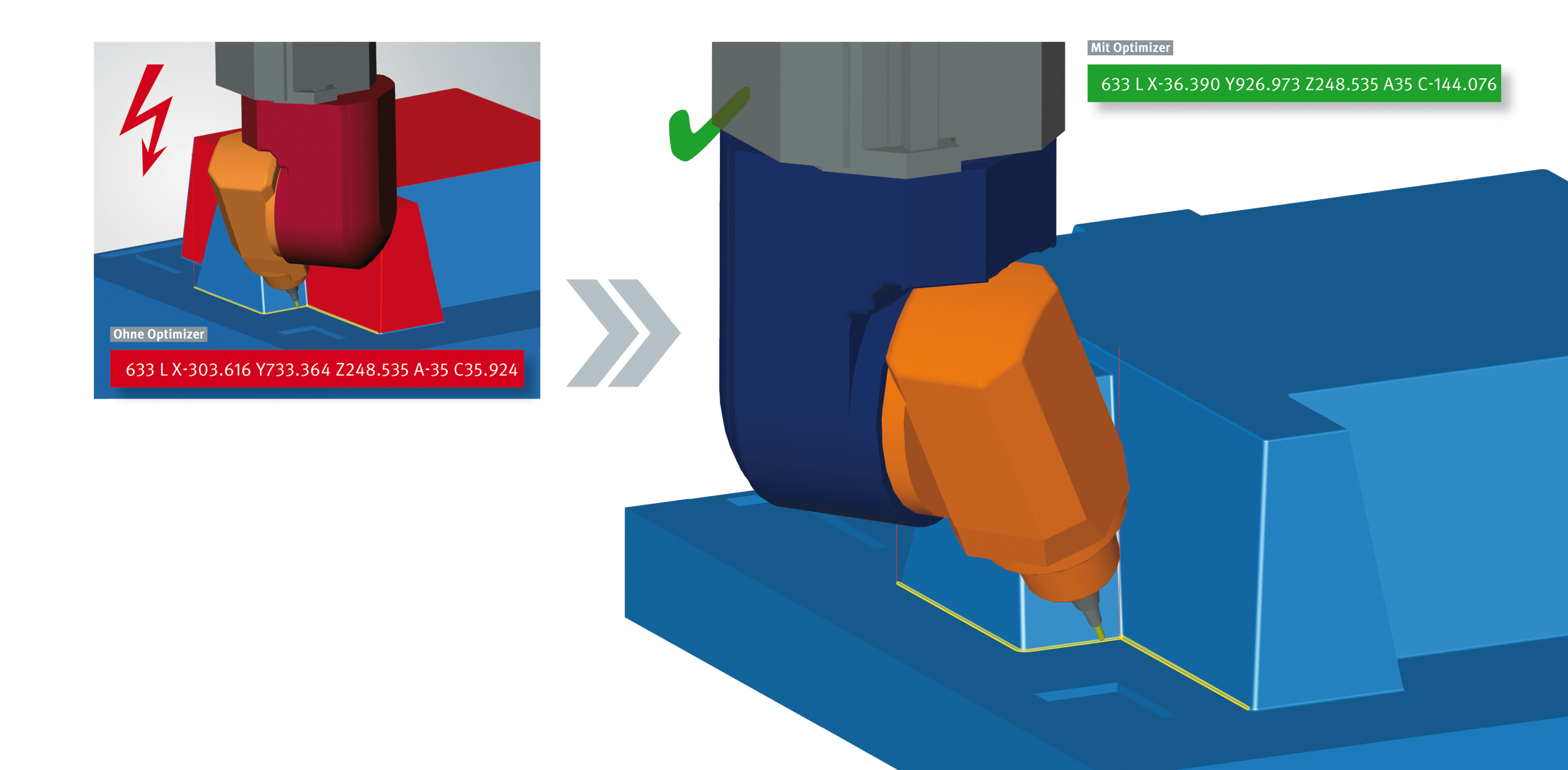
The hyperMILL Optimizer automatically evaluates different alternatives. If collisions, axis limit violations, or unfavorable machine positions are detected, it automatically searches for more suitable solutions.
This results in NC programs that not only work in theory but also run stably and efficiently under real-world conditions.
Optimize transition movements and reduce downtime
A particularly important practical consideration is the transition between individual machining steps.
Many NC programs contain movements that do not produce any chips but can nonetheless account for a significant portion of the machining time. Such non-productive time is often accepted because manual optimization is complex and time-consuming.
The hyperMILL Optimizer automatically generates optimized connection paths between 2.5D, 3D, and 5-axis operations, taking into account the machine’s actual capabilities.
The result: smoother motion sequences, fewer unnecessary travel distances, and an overall more efficient machining process.
Detect axis limits early and automatically work around them
Axis limits also frequently pose a challenge in CNC machining. When the maximum travel range of a rotational or swivel axis is reached, machine positions must be recalculated.
Such situations can lead to longer processing times, unexpected machine movements, or even a decline in the quality of the component’s surface.
The Optimizer identifies critical situations in advance and automatically calculates alternative axis positions or necessary rewind movements.
This results in smoother and more harmonious machine movements, which can have a positive impact on process reliability, surface quality, and tool life.
Mastering Complex Machine Kinematics with Confidence
For machine tools with multiple rotational axes or complex kinematics, manual NC code optimization quickly reaches its limits.
This is where the technology really shines: Additional parallel axes, the automatic positioning of rotary axes, and the ability to account for complex machine kinematics enable a level of optimization that would be virtually impossible to achieve manually in a cost-effective manner.
For CAM programmers, this means less rework and greater reliability when performing complex machining operations. At the same time, the quality of NC programs becomes more reproducible and less dependent on the expertise of individual specialists.
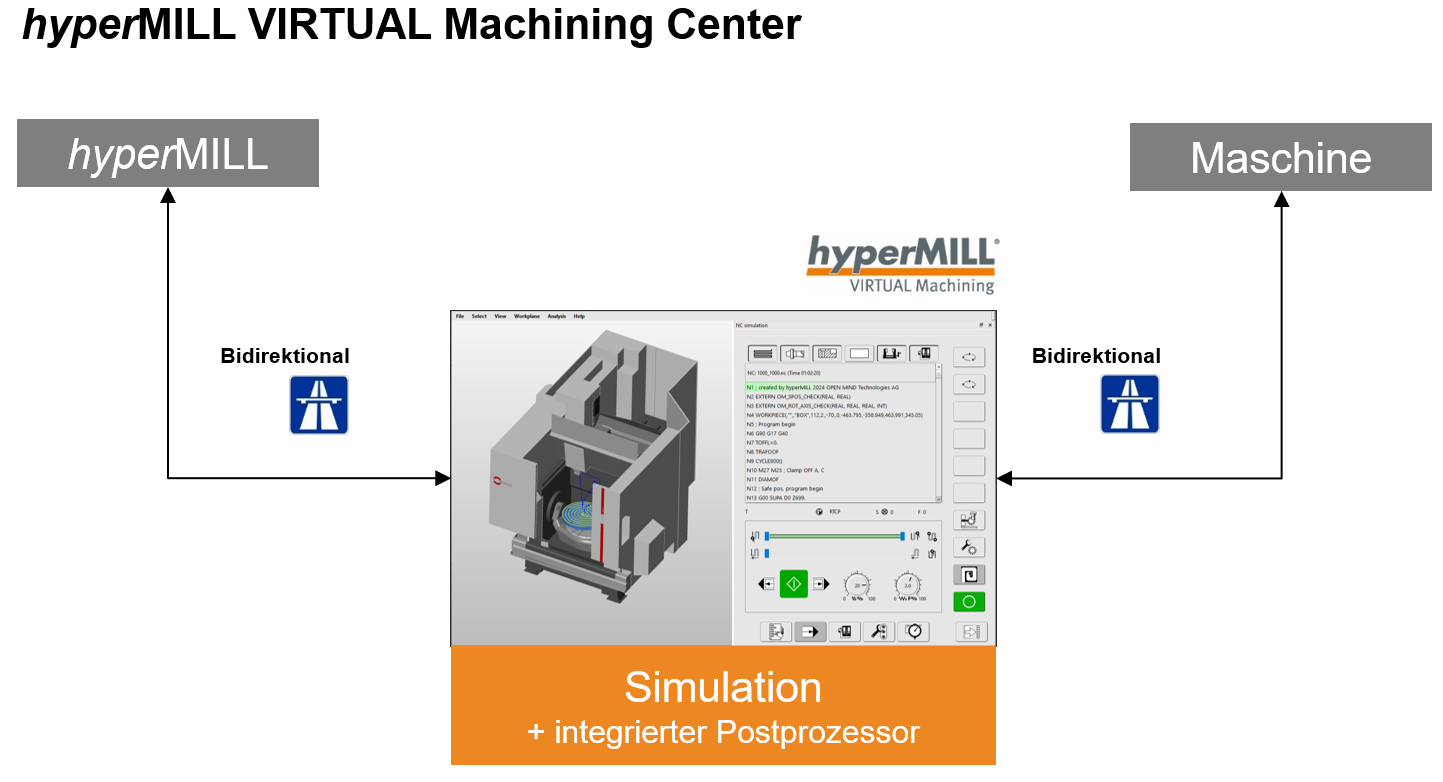
Integrated NC code simulation instead of a separate standalone solution
Integrated NC code simulation instead of a separate standalone solution
Another key advantage is its full integration with hyperMILL.
Toolpath programming, post-processing, NC code generation, and NC code simulation all operate within the same software environment. Separate simulation systems, on the other hand, often require additional interfaces, their own machine models, or complex import and export processes.
Each additional step in the process can also create new sources of error.
In hyperMILL, however, the individual processes all access the same database. Changes to the program, tools, or clamping devices are applied immediately and are available right away for NC code simulation.
This is precisely what makes the hyperMILL Virtual Machine so unique: NC code simulation is directly integrated into the CAM environment.
From the virtual machine to actual production
Users work entirely within a single platform and do not have to switch between different software solutions. This reduces maintenance efforts, simplifies the programming process, and at the same time increases process reliability.
Connected Machining also allows for transparent tracking of changes between the virtual and real manufacturing worlds. Adjustments can be evaluated immediately, bringing programming, simulation, and actual machine operations even closer together.
Free Insights
Watch our latest webinar recording on hyperMILL Virtual Machining for free and improve your manufacturing efficiency!
Conclusion: NC code simulation is becoming a tool for active manufacturing optimization
The term “NC code simulation” actually doesn’t quite capture what the hyperMILL Virtual Machine does.
The technology does more than just show what will happen on the machine; it actively influences how the machine performs the machining operation. The digital twin, therefore, serves not only as a monitoring tool but also as a tool for optimizing the entire manufacturing strategy.
This can reduce risks even before the machine is first started up, shorten downtime, and help maximize the potential of modern machine tools.
It is precisely this step—from pure simulation to intelligent optimization—that makes the hyperMILL Virtual Machine a key component of reliable and cost-effective CNC manufacturing.
Are you still eager to learn more?
Here’s another blog post on the topic: