
 CAD, Construction
 3D Printing
 CAM, CNC
 3D Metrology
 PDM, MES
 Architecture, Construction
 Mechatronics & Robotics
 Image Processing
 Hardware
 CAD, Construction
 3D Printing
 CAM, CNC
 3D Metrology
 PDM, MES
 Architecture, Construction
 Mechatronics & Robotics
 Image Processing
 Hardware & Software
 Mechatronics & Robotics
Injection molding simulation is the digital analysis of the injection molding process based on CAD data, material information, and process parameters. It helps identify filling problems, warpage, and other quality risks even before tooling is built, and provides a solid basis for making informed development decisions.
Key Takeaways
- Injection molding simulation identifies risks even before tooling is built and helps to identify filling problems, warpage, sink marks, weld lines, and air pockets at an early stage.
- Early simulation reduces costly tooling changes, shortens development times, and increases process reliability all the way through to production readiness.
- Autodesk Moldflow allows you to realistically analyze and optimize filling behavior, cooling, shrinkage, and material flow based on CAD data.
- The WESTCAM Component Quick-Check provides an initial technical assessment of whether and to what extent an injection molding simulation is worthwhile for your plastic component.
- Injection molding simulation supports fact-based decisions in component development, mold design, and material selection, and contributes to more cost-effective product development.
WEBINAR TIP: Autodesk Moldflow – Simulation Doesn’t Have to Be Expensive
October 2, 2026 | 10:00 a.m. – 10:45 a.m.
Professional injection molding simulation doesn’t have to be complicated or involve high upfront costs. In this webinar, you’ll learn which simulation solution best fits your needs and how you can make informed decisions in part development with a manageable amount of effort.
Your tool is ready—and now it’s going to cost a lot
Many plastic components look perfect in CAD. However, reality only sets in with the first injection-molded parts.
If defects such as warping, sink marks, weld lines, or filling issues occur, tooling modifications are often unavoidable. These modifications consume time and budget and delay the product launch.
This is exactly where injection molding simulation comes in: It highlights critical areas before the steel is milled.
A tool often costs between €30,000 and €100,000.
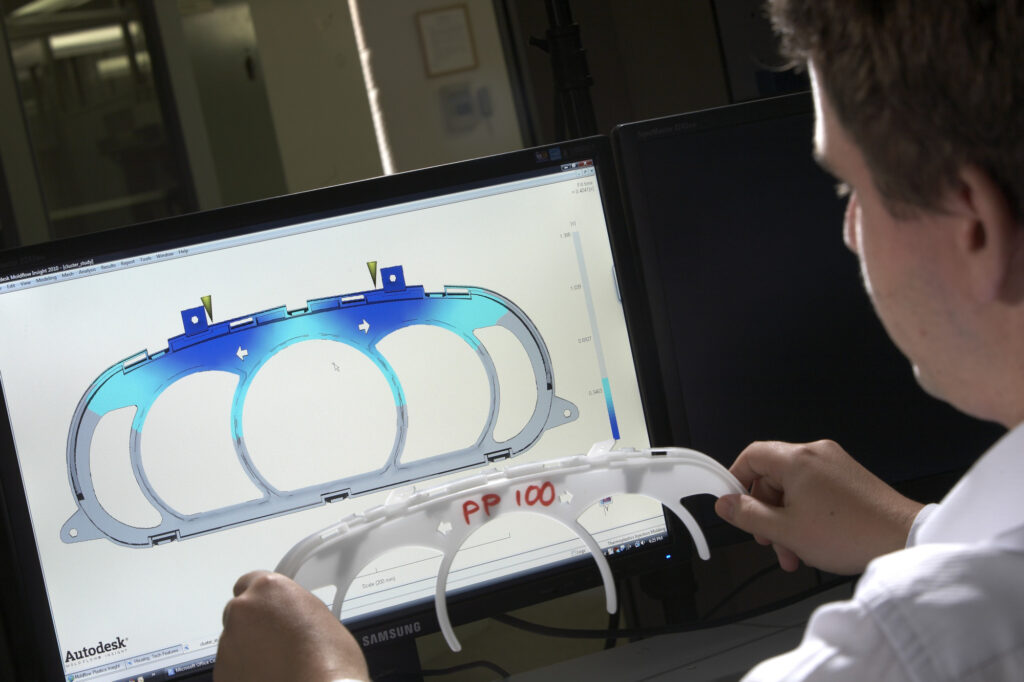
Why Simulation Pays Off
A virtual analysis of the injection molding process provides reliable insights into filling behavior, pressure, temperature, shrinkage, cooling, and warpage. This gives design, tooling, and manufacturing teams a common basis for decision-making and enables them to implement optimizations at an early stage.
The Most Common Challenges
• Warpage due to uneven shrinkage
• Sink marks caused by material buildup
• Seam lines in critical areas
• Air pockets and incomplete filling
• Long cycle times due to inefficient cooling
All of these effects can be evaluated and specifically improved even before tooling is manufactured.
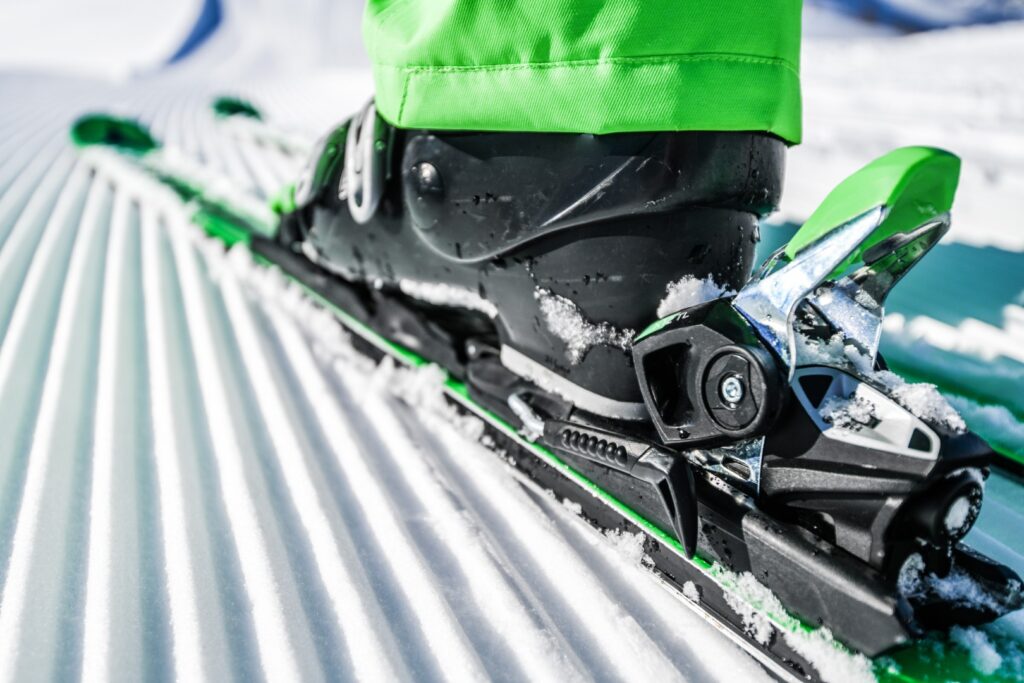
PRACTICAL EXAMPLE: Ski Binding Plate
A real-world WESTCAM project illustrates this added value particularly clearly:
In the case of a ski binding plate , the component should be designed to deform in a specific direction after cooling.
Using Moldflow simulation, the cooling system was optimized to achieve the desired curvature while also reducing tooling costs.
Here is a very specific and detailed real-world example:
Specification: The component should bend between 2 and 4 mm—preload.
- The component typically warps 4 mm in the wrong direction (based on experience)
- Result after simulation and optimized cooling: 2.4 mm in the right direction
- The tool was manufactured as planned > Cost savings of approximately €12,000

“Our goal is to help our customers make better decisions before costs are incurred. If we identify a risk early on and resolve it together, the simulation has already paid off.”
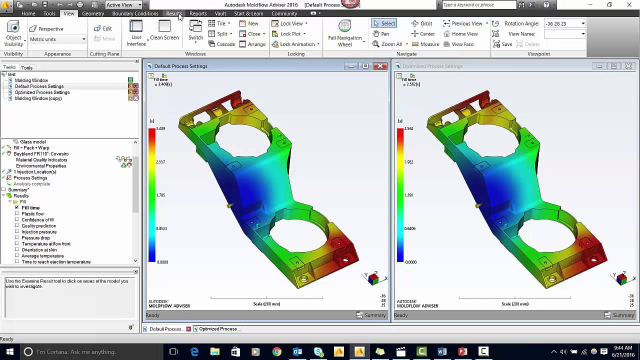
Here’s How WESTCAM Supports You
Using Autodesk Moldflow (Moldflow Adviser, Moldflow Insight) and drawing on many years of project experience, the WESTCAM experts perform a comprehensive analysis of your part.
The focus is not on software results, but on specific recommendations for design, tooling, and process.
You will receive easy-to-understand analyses and clear recommendations for action.
CHECK YOUR COMPONENT NOW FOR FREE:
Would you like to know if your plastic part is designed for injection molding?
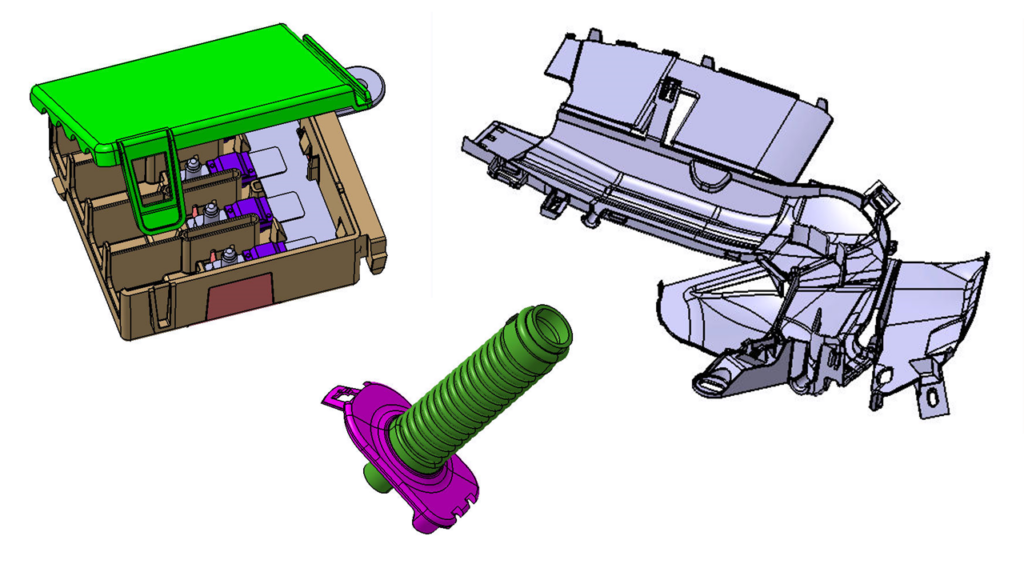
Take advantage of our free quick check. Upload your CAD model and receive an initial expert assessment with specific optimization recommendations—before costly tooling changes become necessary.
✔ Upload a part
✔ Identify risks early
✔ Reduce tooling costs
✔ Achieve production readiness faster >

Upload your component now and get free feedback!
Frequently asked questions (FAQs)
What is injection molding simulation?
An injection molding simulation digitally models the injection molding process. Based on CAD data, material information, and process assumptions, it is possible to evaluate filling behavior, pressure, temperature, shrinkage, warpage, sink marks, weld lines, and cooling.
When is injection molding simulation worthwhile?
It is particularly worthwhile prior to tooling, for technically demanding plastic components, visible surfaces, tight tolerances, complex geometries, or when high tooling changeover costs need to be avoided.
What is the difference between a quick check and a full simulation?
The Quick Check is an initial technical assessment based on your component data and problem description. The full simulation includes a detailed calculation, analysis, and discussion of the results. Following the free Quick Check, we’ll be happy to provide you with a customized quote for a full simulation.
What specific problems can WESTCAM help with?
| Customer issue | What the Simulation Reveals |
| The component warps after cooling | Warping is often caused by uneven shrinkage, temperature differences, or unfavorable fiber orientation. The simulation shows which factors are relevant. |
| Points of entry on visible surfaces | Flash often occurs due to localized material buildup, ribs, domes, or unfavorable holding pressure conditions. Moldflow identifies critical areas early on. |
| Binding seams reduce strength or affect the appearance | Where flow fronts meet, visible or mechanically critical weld seams may form. Simulation helps with evaluation and optimization. |
| Filling Problems in the Mold | Incomplete filling, air pockets, or excessive pressure can be analyzed in advance. |
| Long cooling times add to cycle time | Cooling affects both quality and cost-effectiveness. Simulation helps evaluate cooling concepts and temperature control more effectively. |
Is it possible to predict warpage in injection molding?
Yes, warpage can be simulated. This simulation takes into account factors such as shrinkage, cooling, fiber orientation, wall thicknesses, and process parameters, among others.
Can the simulation detect indentations and seams?
Yes, a Moldflow analysis can identify critical areas prone to sink marks and provide guidance on optimizing geometry, wall thicknesses, or hold pressure. This allows critical areas to be optimized even before tooling is built.
What information is required?
Ideally, a 3D CAD model, information about the material, and a brief description of the challenge.
The information we ideally need:
3D model: STEP, IGES, Parasolid, Inventor, or a comparable CAD format
Information on the plastic material or desired material group
Planned manufacturing process and production volume, if known
Known issues from previous samples or molds
Desired outcome: less warpage, better appearance, shorter cycle time, more robust manufacturing
Is Moldflow only suitable for large companies?
No. Medium-sized companies, in particular, benefit because this helps reduce costly iterative design changes in tooling.
Is the Quick Check free?
Yes. The Quick Check serves as an initial technical assessment of your component and helps determine whether a detailed simulation is warranted. Following the free Quick Check, we’ll be happy to provide you with a customized quote for a full simulation.
Can WESTCAM also provide support in an advisory capacity?
Yes. WESTCAM can assist customers both in evaluating specific components and in selecting and using Autodesk Moldflow.